
Do we understand the implications of Transhumanism? Are we giving our humanism away cause there might be no way back

The concept of implanting artificial intelligence (AI) directly into the human body raises both potential benefits and concerns. It is important to note that the current state of technology does not allow for the direct integration of AI into the human body as commonly portrayed in science fiction. However, there are ongoing developments in the field of neural interfaces and brain-computer interfaces that aim to establish a more direct connection between humans and AI systems.
AI implants offer the potential for enhanced cognitive abilities, improved health monitoring and management, and the restoration of lost functionalities. These implants could augment human intelligence, memory, and cognitive processing, leading to better learning and decision-making. They could also provide real-time health monitoring, early disease detection, and personalized treatment recommendations, improving healthcare outcomes. For individuals with disabilities, AI implants hold the promise of restoring lost sensory or motor functions, enhancing their quality of life. However, careful consideration must be given to ethical concerns, privacy issues, and potential risks associated with the integration of AI into the human body.

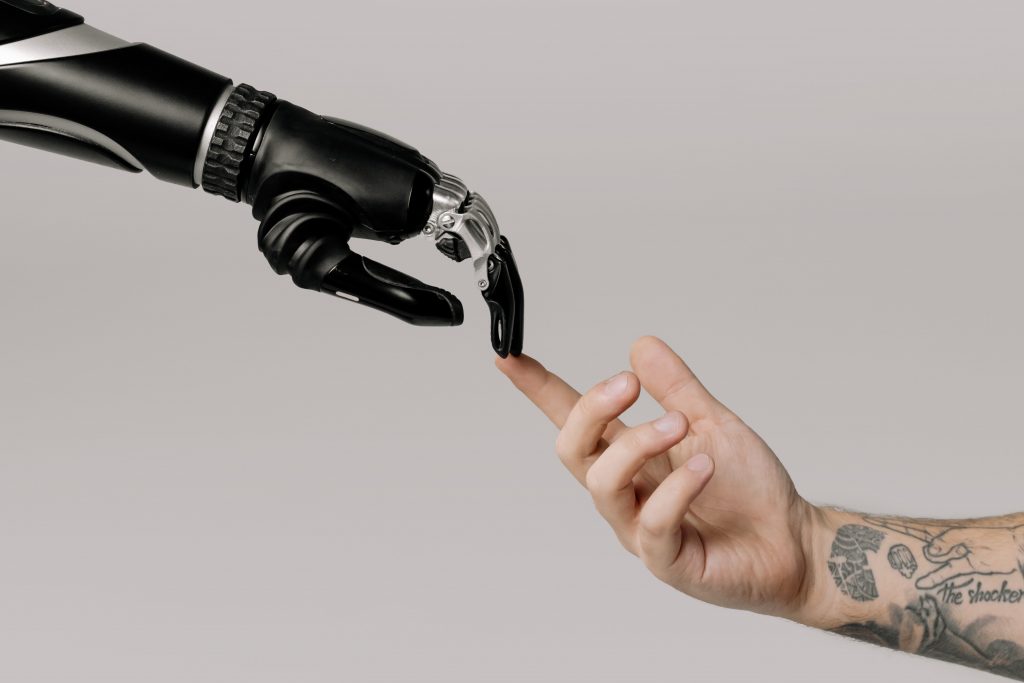
However, the integration of AI implants into the human body also raises concerns and potential risks. Privacy and security become important considerations, as implantable AI devices may collect and transmit personal data. Ethical questions arise regarding autonomy and the potential for external influence. Additionally, health risks such as infection, rejection, and malfunction need to be carefully managed. Social implications include the possibility of creating divisions and inequalities if access to AI implants is limited. It is crucial to address these concerns and risks through robust regulations, transparency, and ethical frameworks to ensure the responsible development and use of AI implants.
Transhumanism and spirituality can intersect in various ways, although they often approach the concept of human enhancement from different perspectives. Transhumanism focuses on the application of technology to improve human capabilities, while spirituality explores the deeper dimensions of human existence and seeks to connect with something beyond the physical realm.
From a transhumanist perspective, spirituality may be seen as an aspect of human experience that can potentially be enhanced or explored through technological means. For example, advancements in virtual reality or neurotechnologies could enable immersive spiritual experiences or altered states of consciousness. Transhumanists may also view the pursuit of transcending human limitations as a way to elevate the human condition, including spiritual aspects.
On the other hand, spiritual perspectives often emphasize the intrinsic value of human existence and the exploration of consciousness and meaning beyond material enhancements. Spirituality encourages introspection, contemplation, and the search for transcendence through practices like meditation, prayer, or mindfulness. It often focuses on aspects such as personal growth, interconnectedness, and the development of inner wisdom and compassion.
While there can be overlap and exploration between transhumanism and spirituality, it is important to consider ethical and philosophical implications. Questions arise around the preservation of human essence, the potential loss of authenticity, and the impact of technological interventions on our understanding of spirituality and the nature of existence.
Ultimately, the relationship between transhumanism and spirituality is complex and varies depending on individual perspectives. Some may embrace technological enhancements as a means to explore and deepen their spiritual experiences, while others may view spirituality as separate from or even in conflict with the pursuit of transhumanist goals.
Choose your pic below
In summary, the belief that we have everything inside us spiritually to achieve greatness emphasizes the importance of nurturing our spiritual well-being, connecting with a higher power or universal consciousness, and developing qualities that can contribute to personal growth and fulfillment. It can serve as a guiding principle to align our actions with our spiritual values and tap into our inherent potential for greatness.



Follow us on: